
From Village Duty to Digital Clarity: An Odyssey of Building an OCR System with YOLO & Gemini
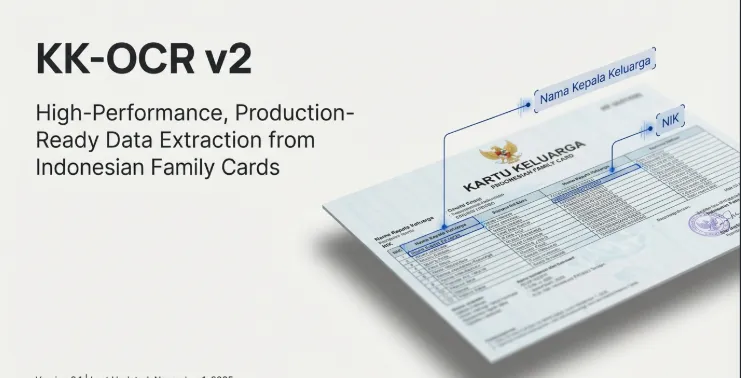
1. The Prologue: A Problem Born from the Heart of the Community
This story does not begin within the pristine, sterile walls of a high-tech laboratory, nor amidst the hum of expensive servers. It begins in a humble village office, bathed in the humidity of the afternoon, during my time in the Community Service Program (Kuliah Kerja Nyata or KKN).
I sat there, watching a village staff member hunched over a mountain of paper Family Cards (Kartu Keluarga). With infinite patience, he typed. Name by name, date by date, digit by digit into an endless Excel spreadsheet. The rhythm of the keyboard was monotonous, a slow march against an ocean of data. It was exhausting just to watch. It was a process rife with fragility; a single typo in a National Identity Number (NIK) could cascade into a bureaucratic nightmare for a family down the line.
A quiet restlessness stirred within me. In an era where artificial intelligence paints pictures and writes poetry, why was this essential pillar of administration still tethered to the manual labor of the past? A thought took root: There has to be a better way. The dream of an Optical Character Recognition (OCR) system a digital eye to lift this burden was born there, amidst the dust and the paper.
2. The Revival: Awakening the Idea on Campus
During KKN, the idea was merely a seed, dormant due to the scarcity of time and tools. But seeds, if resilient, do not die; they wait for the rain.
Upon returning to university, the landscape shifted. I was appointed Head of the Research Division in our student association. Suddenly, the isolation of the village was replaced by a symphony of bright minds. I realized I was no longer alone; I had a team, access to computational power, and an academic environment that breathed curiosity.
We gathered the team and dusted off the memory of that village office. We decided to breathe life back into the Family Card OCR project. The seed had finally found its fertile ground.
3. The Technical Odyssey: From the Fog of Failure to Clarity
Like all great journeys, ours was not a straight line. It was a winding path of hypotheses, failures, and hard-won epiphanies.
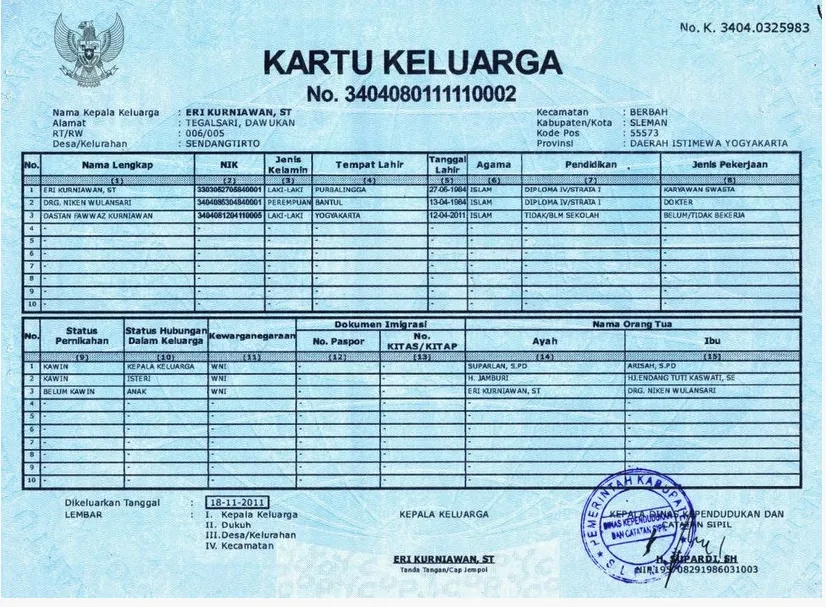 Figure 1: The challenge a complex Indonesian Family Card (KK) document loaded with dense tabular data.
3.1. The Siren Call of Simplicity: The Limits of "VLM Only"
Our first instinct was to chase simplicity. We asked ourselves, "Why complicate things? Let us simply show the entire document to a giant brain." We built a pipeline using a Vision Language Model (VLM) specifically Gemini feeding it the full image of the Family Card in one go.
In theory, it was elegant. In practice, it was a mirage. The model, though brilliant, stumbled when faced with the chaos of the real world:
- The Fog of Quality: On blurred or folded scans, accuracy plummeted to a disheartening 85-92%.
- The Hallucination: The model began to dream. It would occasionally invent numbers or names that never existed a fatal flaw for demographic data.
- The Labyrinth of Rows: The most frustrating struggle was association. The model would get lost in the dense tabular structure, confusing a child’s birth date with the mother’s.
- The Black Box: We had no control. We were at the mercy of the model’s interpretation, with no way to enforce the rigid structure a government document requires.
We realized that asking the model to do everything at once was like asking a scholar to read a book in a dark room while running a marathon. It was too much.
3.2. The Epiphany: The Eagle and the Scholar (Hybrid Approach)
The failure of the singular approach led to our breakthrough. We realized we didn't need one genius; we needed a specialist team. We pivoted to a Hybrid Approach, orchestrating a dance between two distinct technologies: YOLOv8 and Gemini.
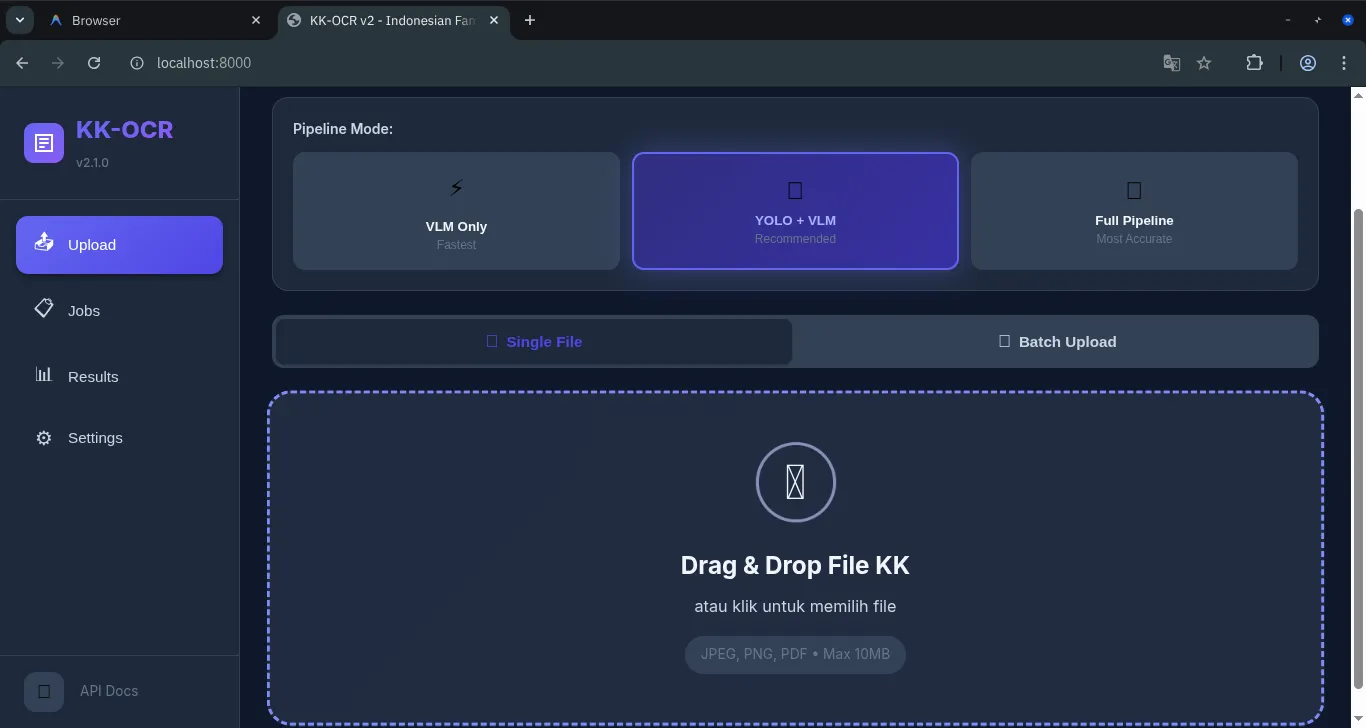 Figure 2: Our application interface, selecting the robust "YOLO + VLM" hybrid pipeline.
- YOLOv8 as the "Eagle Eye": Its role was singular and sharp. It did not need to read; it only needed to see. We trained it to hunt for the 22 specific zones of information the NIK, the Name block, the tabular rows. It sliced through the visual noise, cropping out the irrelevant background and serving up clean, isolated snippets of data.
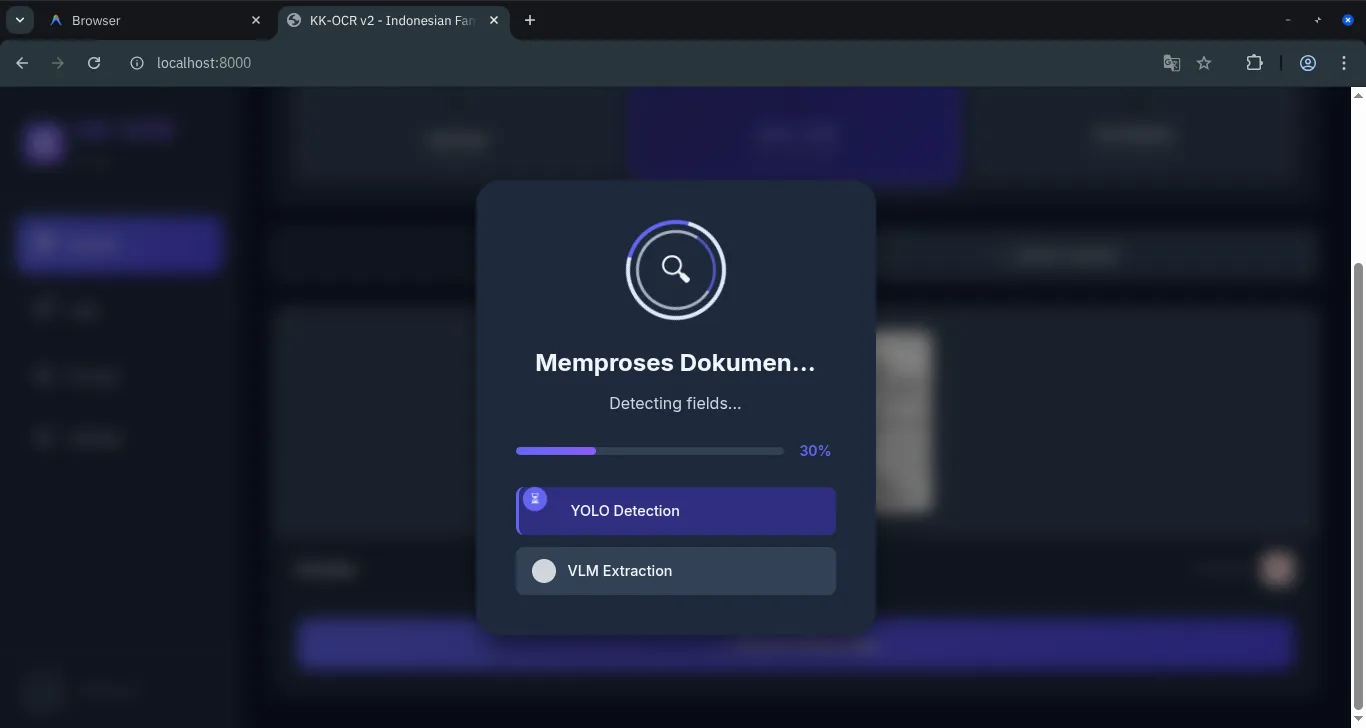 Figure 3: The system in action. The "YOLO Detection" phase isolates data fields before passing them to the VLM for reading.
 - Gemini as the "Focused Scholar": Once YOLO had prepared the "food," Gemini could feast. Handed a clean, cropped image containing only a specific column (e.g., just the NIKs), Gemini no longer needed to guess the structure. It simply had to read.
3.3. Why the Synergy Triumphed
This division of labor turned the tide. By splitting the problem, we conquered it.
| Feature | VLM Only (The Broad Stroke) | Hybrid YOLO + VLM (The Precision Surgery) |
|---|---|---|
| Philosophy | "Read it all at once." | "Find first, read second." |
| Strengths | Simple, fast setup, no GPU training needed. | Robust accuracy, structural awareness, handles messy inputs gracefully. |
| Weaknesses | Hallucinations, structural confusion, fragile to bad lighting. | Requires GPU for the "Eagle Eye," slightly more complex architecture. |
While we flirted with even more complex methods (like adding U-Net for image enhancement), the YOLO + Gemini hybrid struck the perfect chord between speed and precision. It was the champion we were looking for.
4. Behind the Code: The Human Struggle
Code compiles, but humans crumble. This technical victory was forged in the fires of academic pressure. My team was not made of full-time engineers, but students.
We lived a double life. By day, we were attentive students in lecture halls; by night, we were researchers debugging pipeline errors. There were evenings fueled only by cheap coffee and sheer willpower. There were deadlines that felt like closing walls. But every time we felt like quitting, we remembered the village staff member, typing away in the heat. That memory was the fuel that kept the engine running.
5. The Horizon: 95% Accuracy and Beyond
After endless iterations, the numbers finally aligned with our hopes.
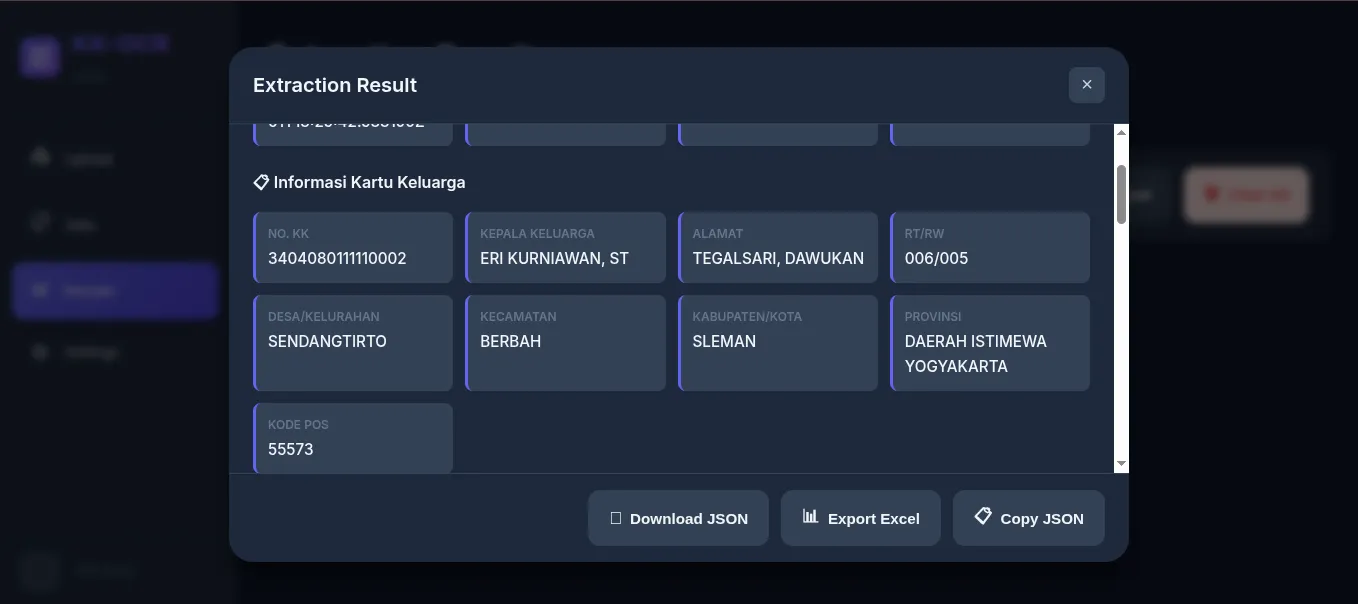 Figure 4: The successful extraction result showing structured data ready for export.
- We achieved a field-level accuracy of over 95%.
- In our recommended hybrid configuration, clean documents saw accuracy soar to 97-99%.
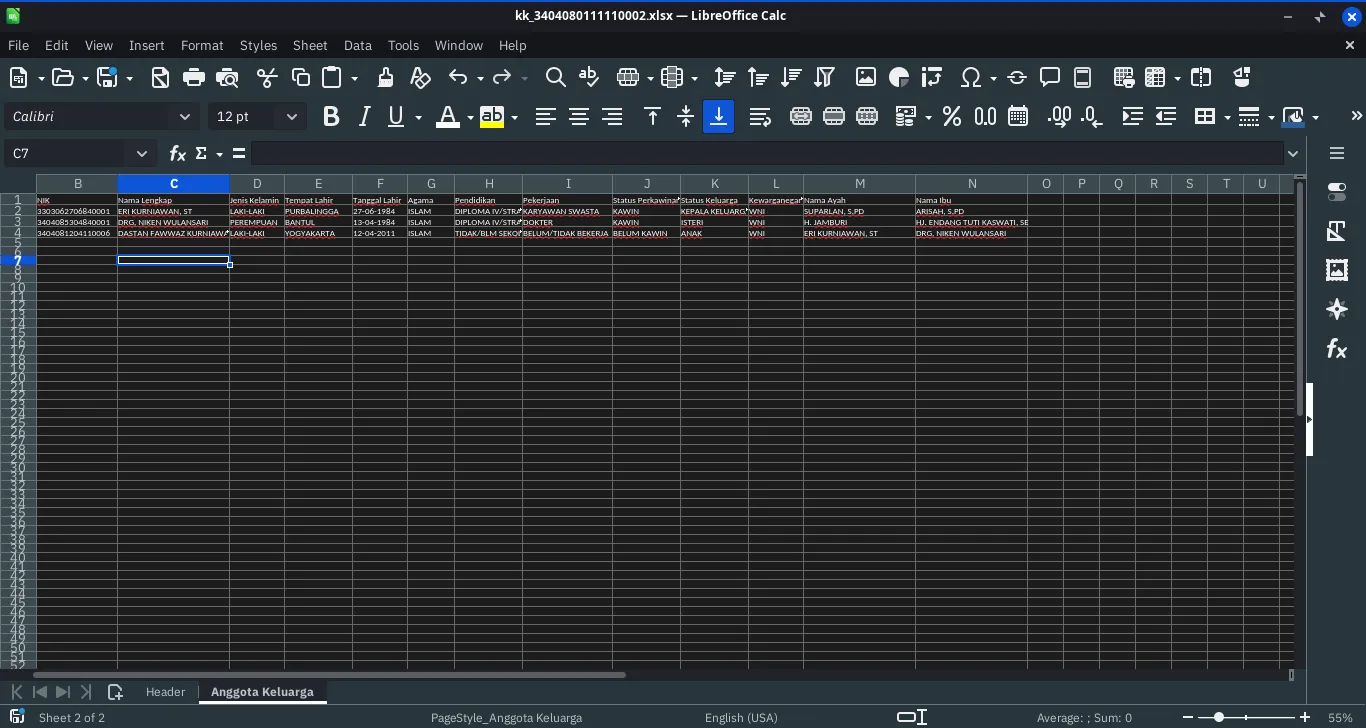 Figure 5: The final output—a perfectly formatted spreadsheet generated from the image.
These are not just cold statistics. They represent hours of human life saved. They represent a future where that village staff member can scan a stack of documents in minutes, not days. We had built a bridge between the physical burden of the past and the digital ease of the future.
Figure 5: The final output—a perfectly formatted spreadsheet generated from the image.
These are not just cold statistics. They represent hours of human life saved. They represent a future where that village staff member can scan a stack of documents in minutes, not days. We had built a bridge between the physical burden of the past and the digital ease of the future.
6. Epilogue: Innovation Blooms from the Roots
This odyssey, which began with a glance at a tired worker in a remote village, taught us a profound lesson. True innovation isn't always found in the abstract clouds of theory. Often, it is hiding in plain sight, buried in the mundane struggles of the world around us.
To the students, the dreamers, and the developers reading this: Look around you. Look at your community, your campus, your local government. There are problems waiting for your eyes to see them. Do not wait for a grand invitation. Start with the dust, start with the struggle, and build something that matters.
Because the best technology is not just about code; it is about empathy.
Related Posts
ChArUco Board: When Chessboard Precision Meets ArUco Robustness
A mathematical deep dive into why ChArUco boards have become the gold standard for camera calibration — with Python code, real-world results from a guava sorting system, and the math behind sub-pixel corner interpolation.
4 Surprising Engineering Lessons from a Palm Tree-Counting AI
Processing gigabyte-sized satellite imagery isn't magic it's engineering. From 'pixel assembly lines' to two-speed architectures, unpack the 4 critical design patterns that turn a simple AI model into a scalable geospatial platform