
From Friction to Flow: Installing OpenFang AI Agents for Daily Life
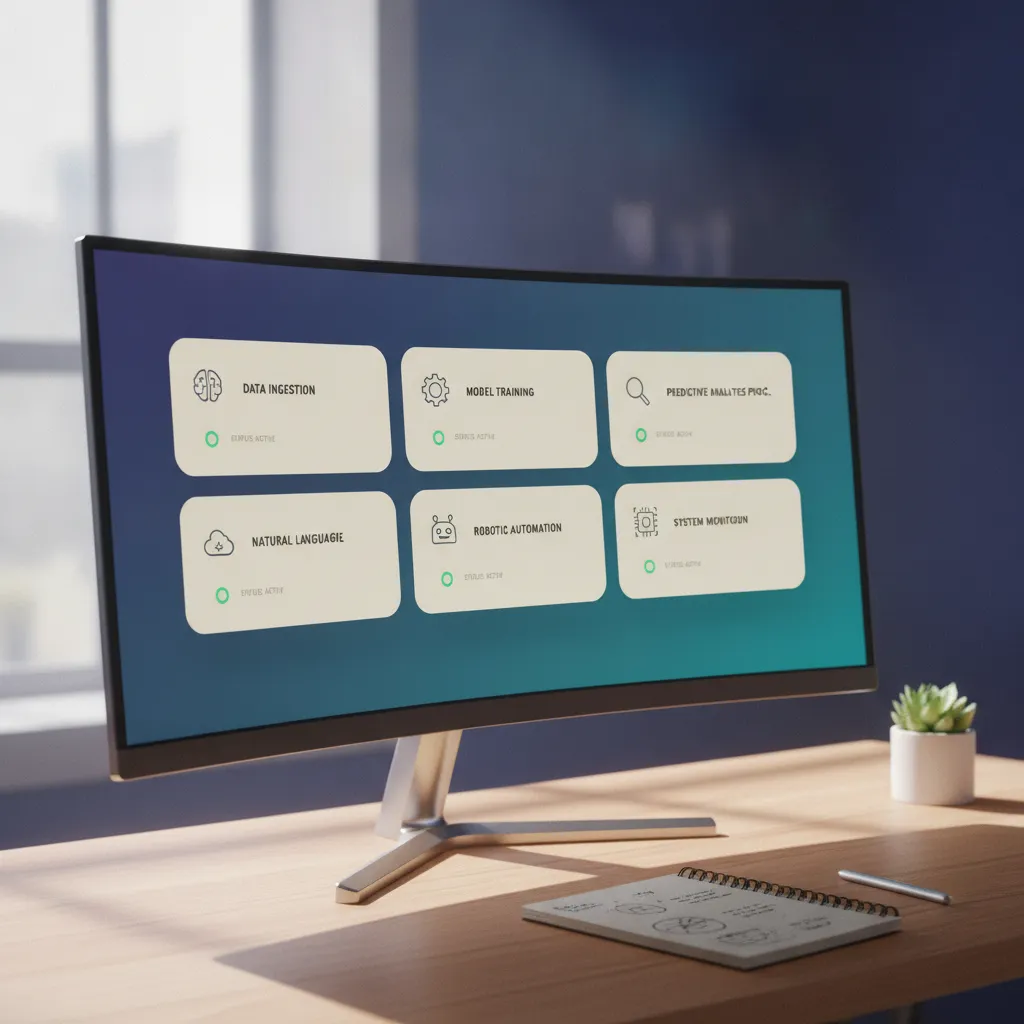
From Friction to Flow: How I Set Up OpenFang AI Agents That Actually Help Me Daily
If I am being honest, my biggest problem was never a lack of tools. It was the opposite: too many tools, too much context switching, and too many repetitive micro-tasks draining focus every single day.
I kept falling into the same loop: open a terminal to check status, switch to the browser for research, go back to write commands, switch again to summarize results. The exhausting part was not the big tasks. It was the tiny frictions repeated dozens of times a day.
That was the moment I started looking for something beyond a "cool chatbot." I wanted an agent system I could actually use as part of daily work. That is where OpenFang came in.
Where Productivity Leaks Through Small Frictions
Before I migrated, my workflow had three classic problems.
Repetitive execution. Daily tasks like quick research, change checks, and output cleanup were done manually over and over. Each occurrence looked small, but they added up to hours per week.
Tool fragmentation. Data and actions were scattered across terminal windows, browser tabs, scripts, and notes. Every switch cost me context and attention.
Operational overhead. The more automation I added, the more maintenance overhead appeared when orchestration was not clean. Glue scripts multiplied like rabbits.
I needed one agent system that runs from the CLI, has a real skills ecosystem, remains secure for real workflows, and is flexible enough for both experiments and lightweight production use.
Why I Picked OpenFang
After reading OpenFang's homepage and documentation, the positioning was clear: this is not just an LLM wrapper, it is an Agent Operating System.
What immediately matched my needs:
- Built in Rust (single binary, fast startup)
- Pre-built agents for fast starts
- Persistent memory across sessions
- MCP integration for tool extensibility
- Broad channel adapter support (Telegram, CLI, web)
- A serious security model (sandboxed execution, audit trail, protection layers)
From a practical standpoint, OpenFang felt like long-term infrastructure for agent workflows, not a short-lived demo.
The Baseline Install
I followed the official shell installer flow. No magic, no fork in the road.
curl -fsSL https://openfang.sh/install | sh
Then I verified the binary was actually on my PATH:
openfang --version
Initialized the OpenFang workspace (config, memory, skills folder):
openfang init
Set a provider API key (Groq in my case, but pick whichever works for you):
export GROQ_API_KEY=<your-api-key>
Ran a health check to make sure the daemon and config were healthy:
openfang doctor
Started the daemon in the background:
openfang start
At this point the baseline is ready: config, memory, daemon, and local endpoints are all active.
First Agent, First Real Feedback Loop
With the daemon running, I started with a built-in agent template rather than trying to design my own from scratch.
Spawn an agent from a template:
openfang agent spawn agents/hello-world/agent.toml
List active agents:
openfang agent list
Start chatting:
openfang chat hello-world
At this stage, I always test three basic capabilities immediately: read files, list directories, fetch web content. If those three are stable, the agent is already useful for real daily workflows. If any of them is flaky, I do not bother adding more skills on top.
From Chat Agent to Work Agent
The key insight is simple: an agent that only waits for prompts stays reactive. For day-to-day work, we need agents with context and consistent operating patterns.
OpenFang provides autonomous capability packages (called Hands) and a skill system. That combination is ideal for recurring research, lightweight monitoring, cross-tool task orchestration, and routine reporting.
So the model is no longer "one prompt, one answer." It becomes "build reusable work units you can call anytime." I started thinking of each agent less like a chatbot and more like a tiny colleague with a fixed job description.
Skill Building and the OpenClaw Compatibility Bridge
This was the most interesting part of my implementation.
I had a folder of skills from the OpenClaw ecosystem that I wanted to keep using. The approach was a compatibility bridge: convert external skill sources into OpenFang-compatible prompt-only skill packages with consistent structure.
The migration concept, in short:
- Pull a skill source (skills.sh, clawhub, or a git repo)
- Find the
SKILL.md - Generate an OpenFang
skill.tomlmanifest - Install into the OpenFang skill registry
A real example. My target was equivalent to this command in the original ecosystem:
npx skills add https://github.com/tavily-ai/skills --skill research
In OpenFang, I ran this through the compatibility bridge with a skill selector:
openfang-import-openclaw.sh skills.sh:tavily-ai/skills#research research "Imported from skills.sh:tavily-ai/skills --skill research"
Validation result: the research skill installed successfully, the selected SKILL.md was correctly resolved to tavily-research, and it appeared in the OpenFang skill registry. Quick verification:
openfang skill list | grep -i research
A practical note on clawhub.ai: I tested download endpoints and observed cases where responses were not always delivered as valid zip archives. That means the safest strategy today is to use direct clawhub when the endpoint is valid, and fall back to manual clone if it fails.
Fallback example:
git clone https://github.com/peterskoett/self-improving-agent.git /tmp/self-improving-agent
openfang-import-openclaw.sh /tmp/self-improving-agent self-improving-agent "Imported from manual clone"
If you are migrating from OpenClaw wholesale, OpenFang's built-in migration command is also helpful:
openfang migrate --from openclaw
Daily Usage That Actually Sticks
Once the setup stabilized, this became my practical daily pattern.
Morning check. Verify daemon and active agents, verify critical skills are ready, continue work without rebuilding setup from zero.
Quick research to deep research. Use research skills for summaries and source cross-checking. I get more consistent outputs because the operating format is encoded in the skill itself, not improvised each time.
Task orchestration. Break work into smaller steps (fetch, analyze, summarize, output) and delegate those steps to agents with the right tools and skills. The orchestrator decides who does what, I focus on the question.
Documentation output. Convert agent outputs directly into work notes, issue updates, or content drafts. The agent writes a draft; I edit; we ship.
The biggest difference: I no longer start from a blank page every time. I start from a system that already understands how I work.
Practical Notes to Keep the Setup Strong
Start with one small use case. Do not go all-in immediately. Stabilize one flow, then scale. I burned a weekend by trying to wire up five skills at once before I had proven one was reliable.
Separate generic skills from domain skills. Keep utility skills general, and use specialized skills per domain. This keeps skill prompts short and reduces cross-contamination.
Always keep a fallback path. If an external source breaks (for example marketplace endpoints), manual clone should still work. Bridges are not magic; they are plumbing.
Run health checks regularly. Use doctor, status, and audit logs to keep the system healthy. A skill that worked last month may break because the upstream API changed.
What I'd Do Differently
Looking back, the biggest shift was mental, not technical. I stopped treating AI agents as fancy chat interfaces and started treating them as a workflow layer. Once I had that frame, the configuration choices followed: KISS architecture, env-var secrets, fallback chains, and a single primary provider with manual rotation if it dies.
The second biggest shift was patience. The first three days felt slower than my old copy-paste workflow. By week two, the cumulative time savings were obvious. By month two, I could not imagine going back to manual orchestration.
If you want AI agents that truly help in everyday life, the key is not the newest model alone. The key is orchestration, the right skills, and consistent workflows. OpenFang gives that foundation. And once that foundation is in place, daily tasks that used to feel exhausting become significantly lighter.
Related Posts
KISS Architecture for AI Agent Stacks: One Provider, One Fallback
Every AI agent tutorial shows a dozen providers, six models, and three proxies. Here is the boring, reliable version: one provider that works, one fallback that probably does not.
Building a Multi-Agent Orchestrator: 12 Specialists, 1 Leader
Stop talking to one giant AI. Set up a small team of specialists with one orchestrator that decides who does what. Here is the architecture I run every day.